조회수
27.2K
월간 방문 수
27.2K
글로벌 순위
##2,276,807
투표 수
0
이 도구 정보
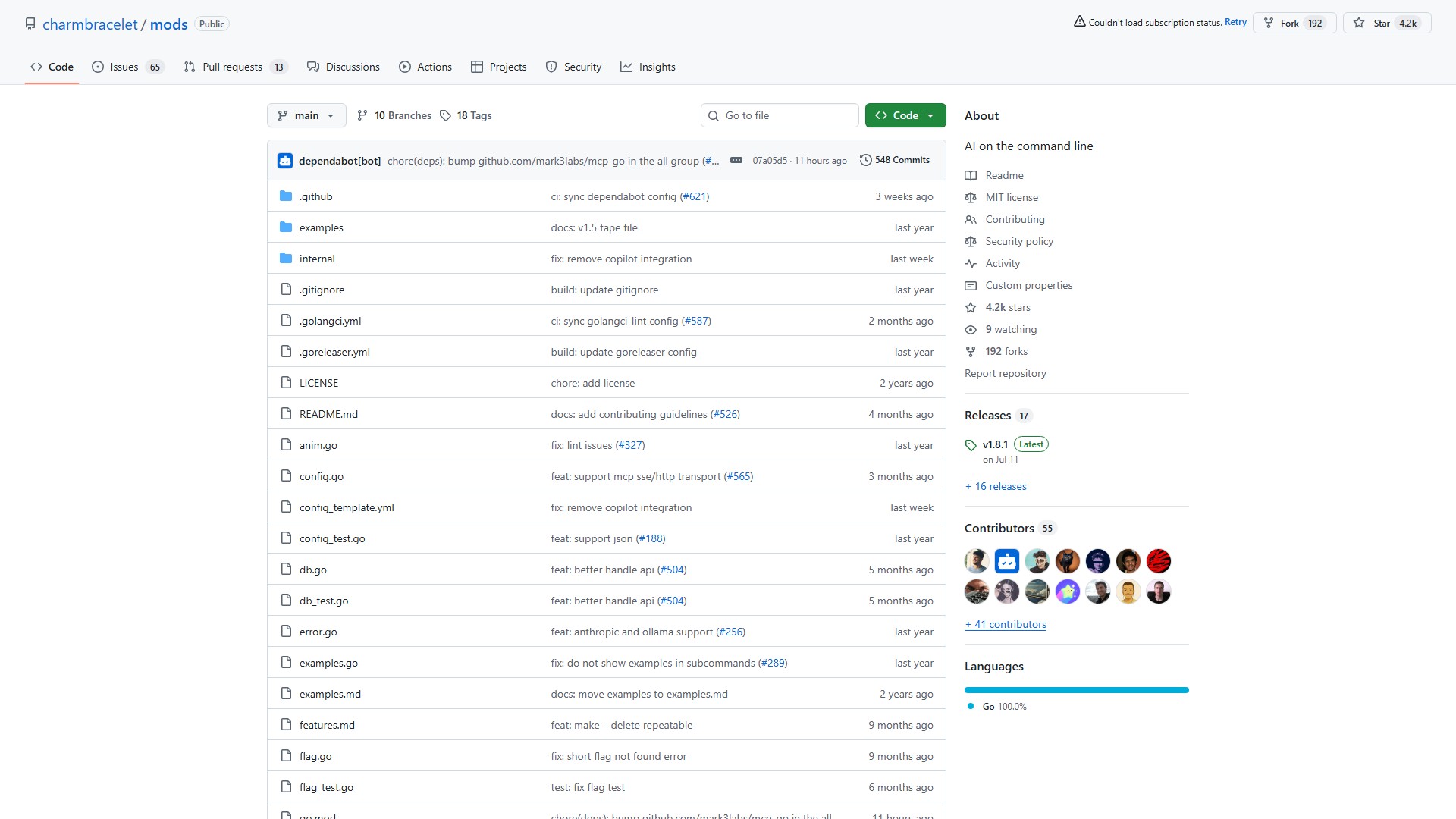
Mods는 파이프라인을 위해 설계된 명령줄 AI 도구입니다. 표준 입력을 읽고 인수로 제공된 프롬프트를 앞에 붙여 LLM으로 보낸 다음 결과를 표준 출력에 표시합니다. 응답을 Markdown으로 형식화하도록 요청할 수 있으며, 표준 입력이나 인수로 제공한 프롬프트만으로도 사용할 수 있습니다.
주요 기능
- 다중 엔드포인트: OpenAI 공식 API와 8080 포트에서 실행되는 LocalAI를 기본 지원하며 Cohere, Groq, Azure OpenAI, Ollama, Anthropic, Gemini도 지원합니다.
mods --settings로 설정 파일에 추가 엔드포인트를 구성할 수 있습니다. - 대화 저장: 대화를 SHA-1 식별자와 제목으로 기본 로컬 저장하고, 목록 보기, 이어 하기, 표시, 삭제를 지원합니다.
- 사용자 지정 역할: 시스템 프롬프트를 설정할 수 있습니다. 예를 들어
shell역할로 설명 없이 한 줄 명령을 출력하도록 지시할 수 있습니다. - MCP 지원: SSE/HTTP 전송 방식의 MCP(Model Context Protocol) 서버를 지원하며 서버 목록 보기, 비활성화, 사용 가능한 도구 목록 보기가 가능합니다.
- 형식 지정 출력:
--format및--format-as플래그로 JSON 등의 출력 형식을 지정합니다. 지원 모델에는 응답 형식을 설정하고, 그 외 모델에는 형식 지시를 프롬프트에 추가합니다. - 파이프라인 통합: 명령의 표준 출력을 AI 처리 입력으로 사용할 수 있습니다.
설치 및 장점
Homebrew(macOS/Linux), Winget(Windows), yay(Arch Linux), Nix, Debian/RPM 패키지, 바이너리 또는 go install github.com/charmbracelet/mods@latest로 설치할 수 있습니다. Bash, ZSH, Fish, PowerShell용 셸 자동 완성도 제공됩니다.
Mods는 MIT 라이선스의 무료 오픈 소스 도구이며 로컬에서 실행되는 모델을 포함한 다양한 LLM 제공업체를 지원합니다. 모델 선택(--model), 대화형 모델 지정(--ask-model), 샘플링 온도(--temp), Top P/K, HTTP 프록시, 최대 재시도 횟수, 토큰 한도 등을 설정할 수 있습니다.
요금
도구 자체는 무료입니다. 다만 OpenAI, Cohere, Groq, Azure OpenAI, Gemini 같은 외부 API를 사용하려면 해당 API 키가 필요하며 비용은 각 제공업체의 요금에 따라 달라집니다.
트래픽 분석
이 도구의 트래픽, 순위 및 참여도 지표입니다.
글로벌 순위
##2,276,807
국가 순위
#2,057,074
월간 방문 수
27.2K
방문 추이
추이 데이터 없음
참여도
- 이탈률--
- 방문당 페이지 수--
- 평균 체류 시간--
트래픽 소스
소스 데이터 없음
주요 국가
국가 데이터 없음
인터페이스 미리보기