
Stop before you paste a compiled binary into a public MiniMax endpoint expecting source code back. It will not work. In Rethinking New Paradigms for Software Protection, MiniMax Research states plainly that its reverse-engineering benchmarks ran on an unreleased internal model that does not reflect live products. On MiniMax's homepage, developers currently get MiniMax M3, MiniMax M3.1 Flash, and MiniMax Code. Every line of generated code, every compiled shared library, and every trace log from the test run has already been wiped from physical storage, and MiniMax is considering restricting or stripping end-to-end software cloning from future public releases.
Still, the toolchain and failure points MiniMax disclosed are directly actionable. They show both how far agentic binary analysis has come since previous-generation models choked on large executables, and where client-side software protections break down.
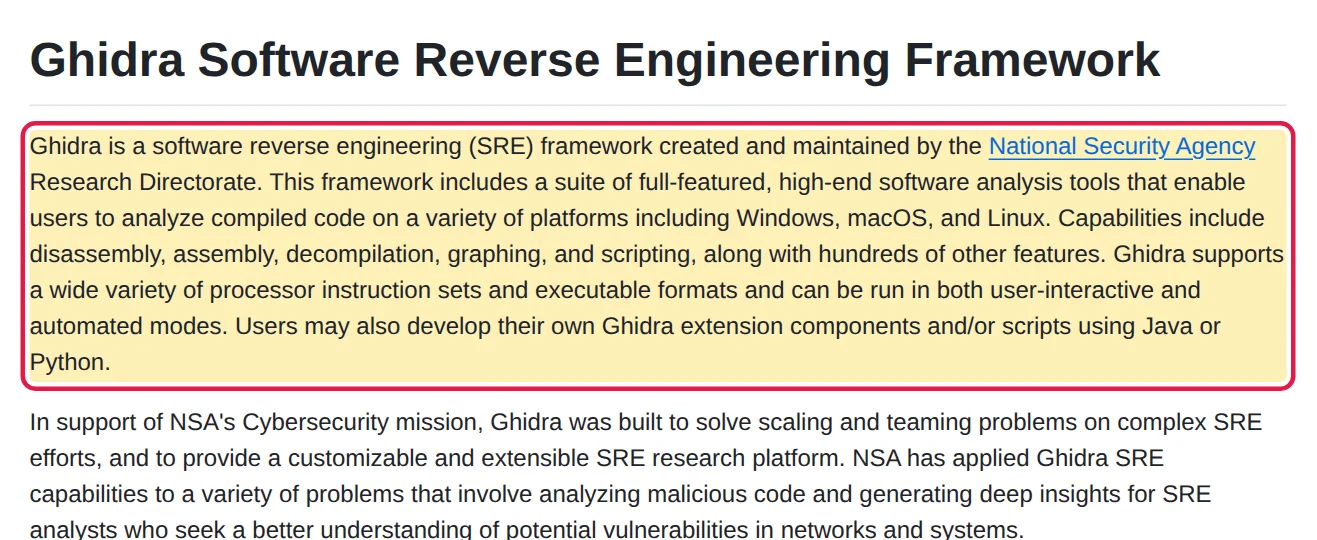
No magic prompt: Ghidra, GDB, and differential testing did the work
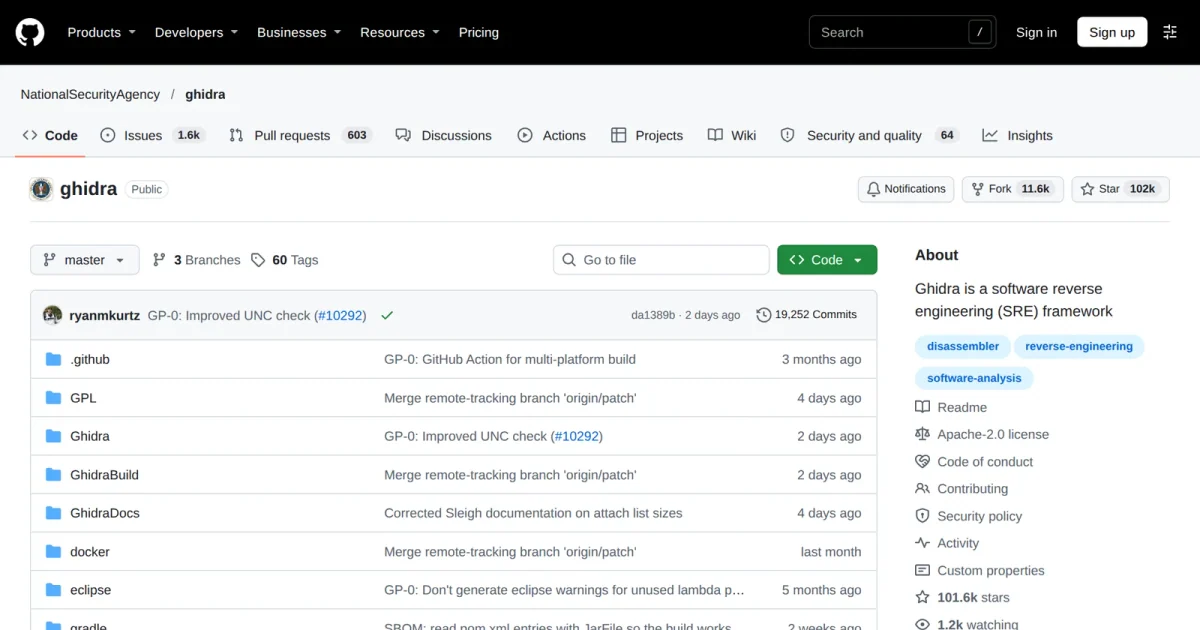
MiniMax started with a benchmark closed-source binary analysis application built to convert compiled machine code into human-readable pseudocode. Earlier models failed on targets of this size because context overload triggered severe hallucinations across massive instruction streams. Instead of asking its latest internal model to stare at raw assembly inside one giant prompt, engineers placed it inside an isolated sandbox wired to Ghidra, the GDB debugger, C/C++ and Rust compilers, a test verification harness, and multi-agent orchestration scaffolding.
The resulting workflow looked like a disciplined systems team. To map internal binary logic, the model called Ghidra APIs, then broke the decompilation pipeline—disassembly, intermediate representation generation, data-flow analysis, control-flow structuring, compiler optimization, and pseudocode emission—into modules for sub-agents to rewrite in Rust. Across the full exploration run, the system coordinated 2,000 sub-agent sessions, wrote roughly 2 million lines of experimental Rust code, and built 10,000 automated test cases. Each newly written module ran side-by-side against the original binary on identical inputs so output diffs forced immediate fixes.
Three validation tests proved how far that rewrite went. Calling the standalone Rust core via CLI and API verified functional parity and showed speed gains over the baseline thanks to Rust's memory model and architectural cleanup. Adding a lightweight visual frontend connected to the Rust backend let analysts load test binaries and browse decompiled functions interactively. Most striking of all, MiniMax compiled the rewritten core modules into shared libraries and dropped them straight into the original closed-source program's directory while keeping its stock GUI. The host binary launched, loaded target executables, and completed decompilation normally, showing that binary ABI contracts, exported symbol tables, and internal state machines all lined up.
How VMProtect 3.x and Themida were unpacked
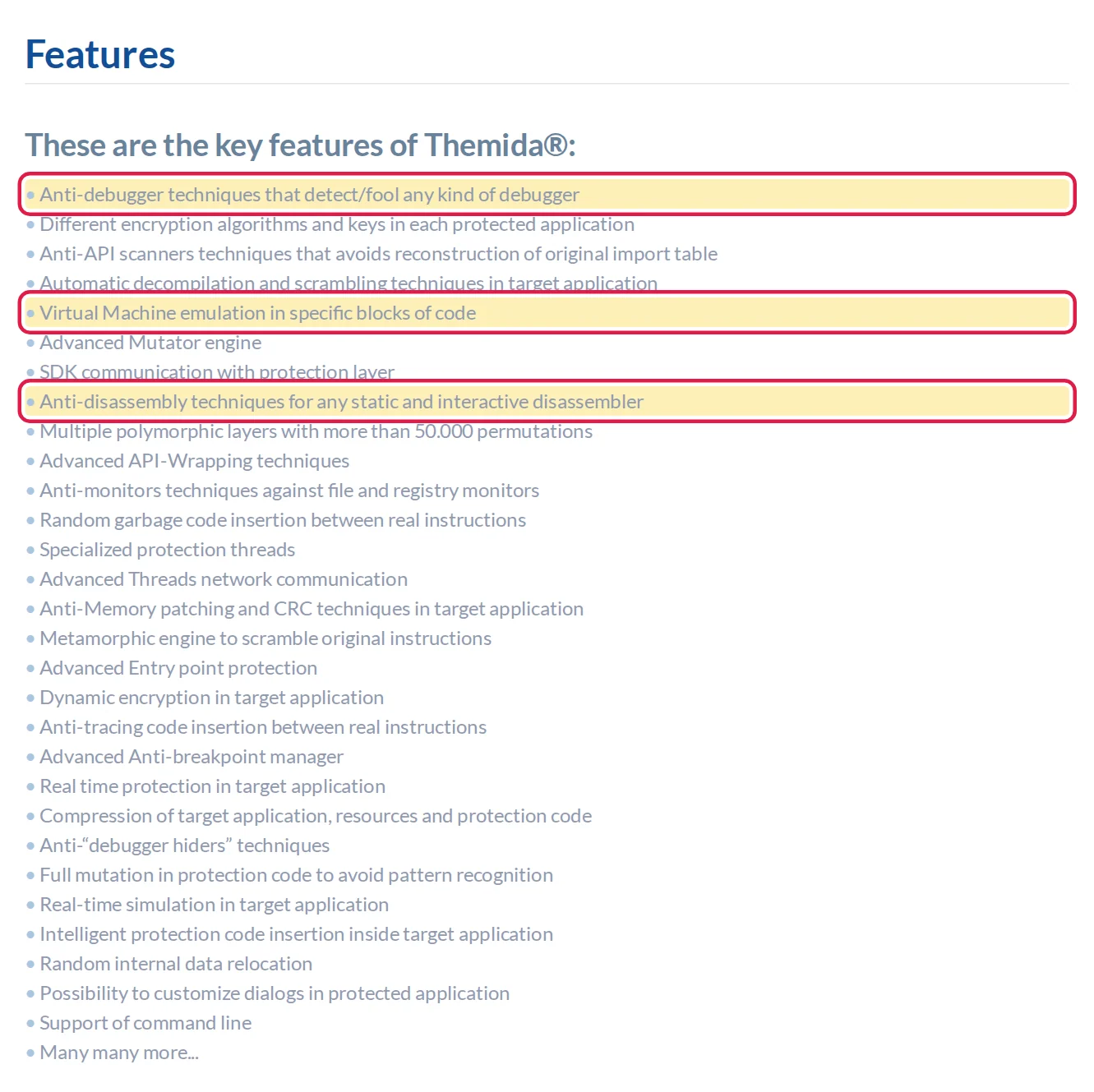
Commercial Windows developers routinely buy packers to guard offline licensing checks and private protocols. Take Themida by Oreans Technologies. Version 3.2.6.0, dated August 11, 2026, sells for 249 EUR for a Developer License or 499 EUR for a Company License, bundling virtual machine emulation, anti-debugger traps, anti-API scanners, dynamic encryption, and anti-disassembly tricks.
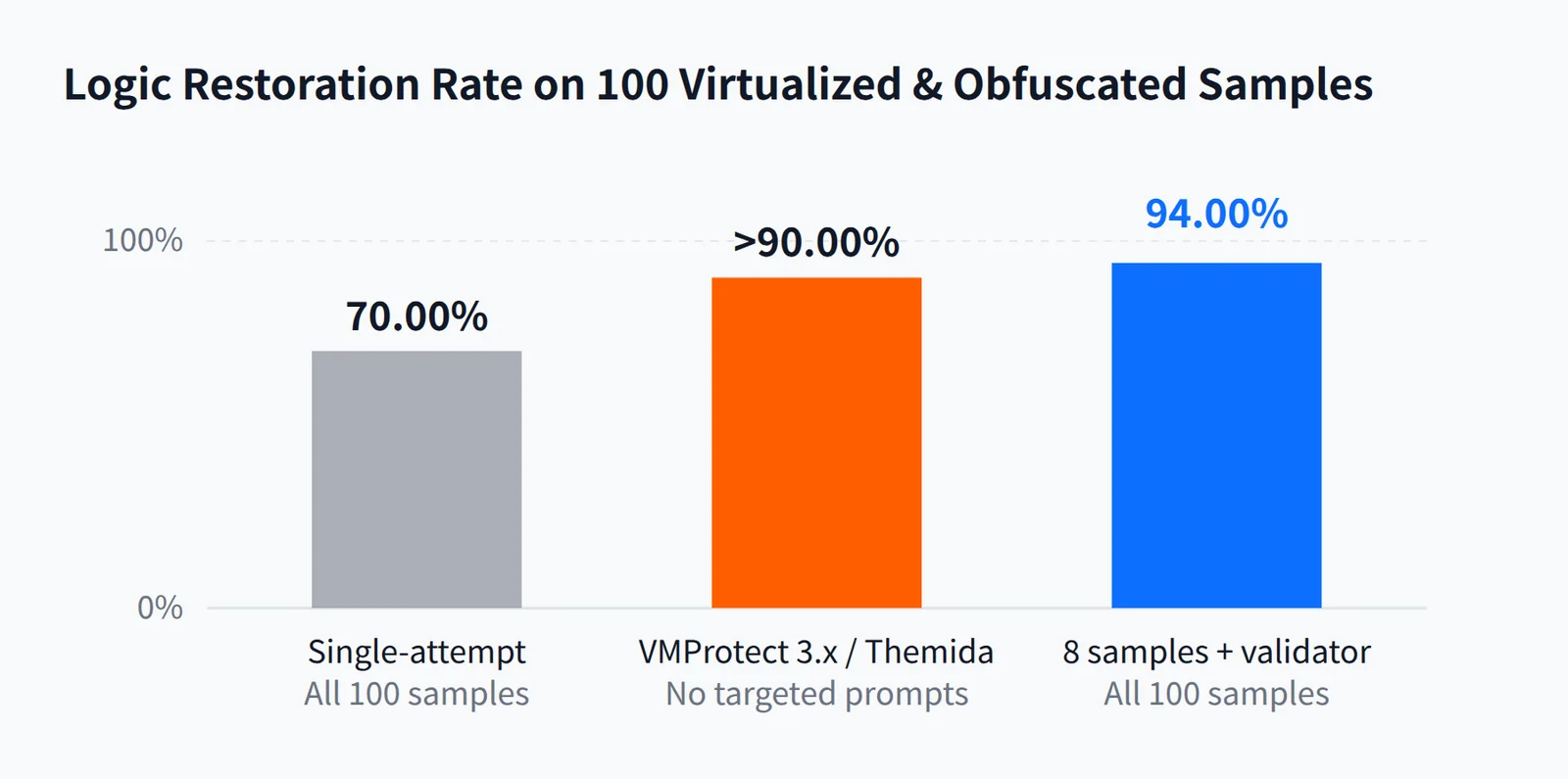
For its second test, MiniMax built 100 hard virtualized and obfuscated samples, including a subset shielded by VMProtect 3.x and Themida. Virtualization wrappers normally translate a few dozen lines of native code into tens of thousands of flattened bytecode instructions with opaque arithmetic twists. Without targeted human prompts, the internal model skipped static line-by-line reading and evolved a two-stage loop: locating the virtual machine entry statically, writing GDB scripts to watch memory reads, writes, and register trajectories to isolate the VM's core computation loop, and combining those dynamic traces with symbolic reasoning to fold mixed boolean-arithmetic clutter back into readable C/C++, checking every rewrite against a validator until outputs converged.
Feedback loops made the difference. Single-attempt restoration hit 70.00% across all 100 hard samples. Allowing 8 samples guided by validator feedback jumped overall restoration to 94.00%. On VMProtect 3.x and Themida specifically, comprehensive logic restoration topped 90.00% with zero tailored hints, shrinking work that takes human security researchers days into automated runs lasting tens of minutes.
Compare that result with Themida's own overview page and the structural weak spot stands out. Oreans explicitly writes that even strong encryption wrappers must decrypt protected code in memory before the CPU runs it, which is exactly when attackers dump binaries from RAM. Traditional protectors mostly bought time by making manual cleanup exhausting. Once an agent automates GDB tracing and symbolic simplification, that time cushion shrinks fast.
Three limits to check before chasing agentic reverse engineering
Do not assume an off-the-shelf coding agent can copy this today. MiniMax flagged three clear walls. When binaries combine multi-layer nested virtualization with aggressive anti-debugging, autonomous first-pass success drops sharply. Huge dynamic execution traces quickly fill the context window and trap the model in dead-end debugging loops.
Even where core logic matches, a commercial release takes far more than pipeline parity. Mature desktop software relies on sprawling peripheral ecosystems, cross-platform UI polish, and years of stability tuning that pipeline diff tests never cover. Coordinating 2 million lines of code also still required bespoke engineering scaffolding locking sub-agents onto strict divide-and-conquer and differential-testing rails.
For software teams shipping closed-source binaries, the practical next step is skipping the hunt for clever reverse-engineering prompts and reviewing your own architecture instead. Audit where offline license checks, private protocols, and billing logic live in client executables. MiniMax points to three concrete paths—moving high-value core logic to server-side cloud execution, pairing critical routines with hardware-backed trusted execution environments, and building dynamic adversarial defenses tuned against LLM reasoning—and invited developers and protector vendors to collaborate via developer@minimax.io. Watch MiniMax's upcoming release notes as well to see how strictly binary-cloning skills stay gated in public APIs.