
Where are the computing cards powering the AI boom being installed? The answer increasingly points to data-center operators. They do not manufacture computing hardware; instead, they build facilities, provide power, cooling and operations, and lease capacity to cloud providers and internet companies. GDS Holdings is one of China’s oldest and most asset-heavy operators.
On August 13, GDS Holdings released unaudited results for the second quarter of 2026. Hong Kong-listed shares rose as much as 13.3% to HK$35.16 during trading the next day.
The headline figures were strong. First-half net profit reached approximately RMB 3.490 billion, reversing a loss, while second-quarter profit was RMB 838 million. Operationally, new contracted capacity reached 470 megawatts in the first half, exceeding the full-year 2025 total. Management doubled its full-year sales target to 1 gigawatt.
Yet the figures require closer examination. How much of the profit came from ordinary operations, and when will the new orders become cash-generating revenue?
AI Is Rewriting an Established Business
GDS Holdings operates like a landlord for the digital economy. It leases completed data-center space, reliable electricity, cooling and network bandwidth by cabinet or power consumption. Customers—including cloud providers, major internet companies, and financial institutions—typically sign contracts lasting five to 10 years, creating highly predictable revenue.
The model has been capital-intensive, long-cycle and highly leveraged since the company was founded in 2000. AI demand is now changing its requirements.
At first glance, GDS Holdings’ first-half net profit of RMB 3.490 billion and second-quarter net profit of RMB 838 million look impressive. The second quarter compared with a loss of RMB 71 million a year earlier, producing a 27.1% net margin.
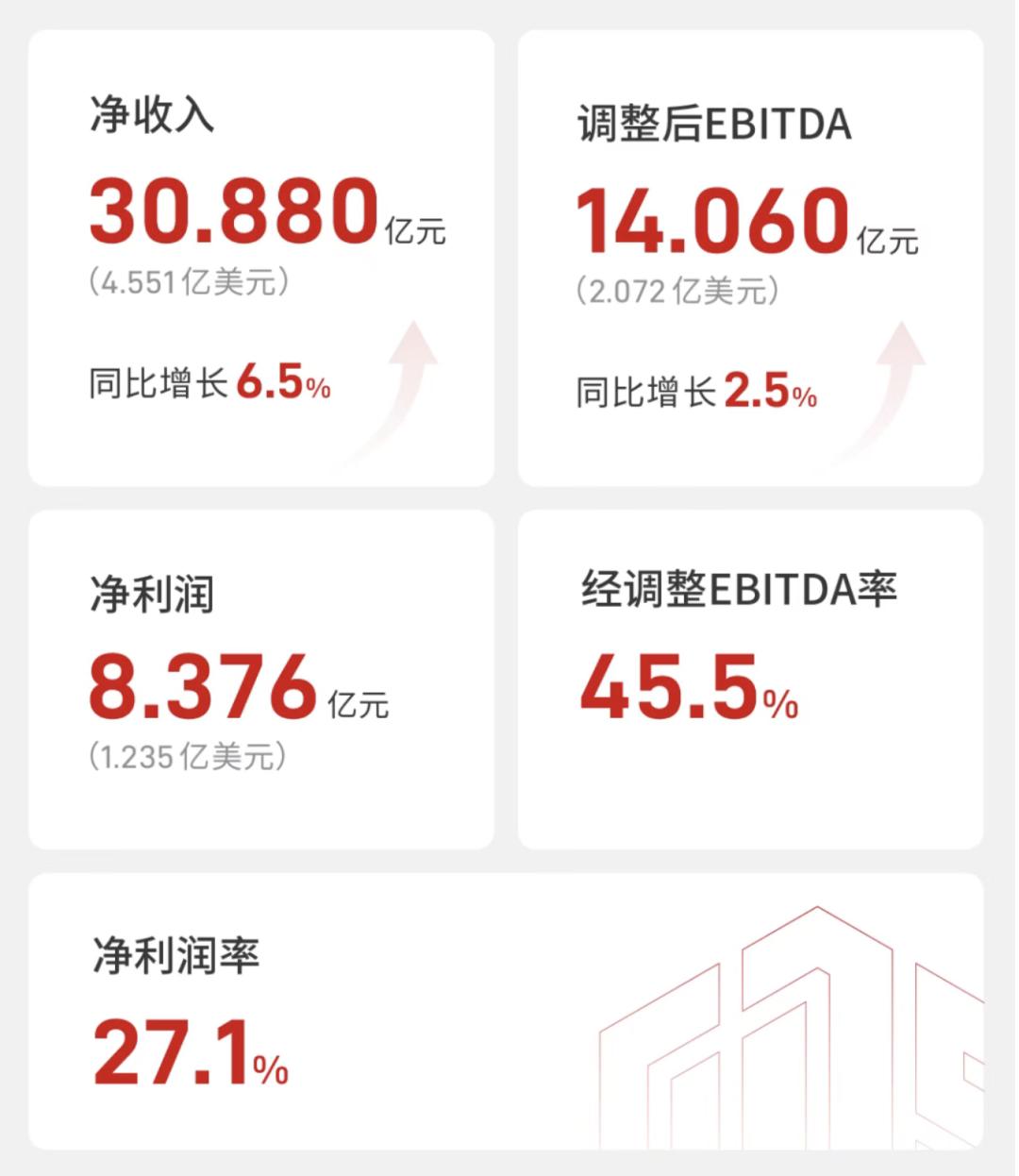
After excluding certain one-time income items, however, the core operating business remained loss-making. A more tangible positive indicator was second-quarter operating cash flow of RMB 1.416 billion, up 64% year over year.
That increase suggests previously accumulated contracts are beginning to generate cash. Data-center agreements are often “take-or-pay”: customers owe payment regardless of utilization. Once servers are installed, contracted capacity becomes recurring revenue. The cash-flow increase indicates that earlier large contracts are moving into stable payment status.
Revenue growth itself was steady rather than spectacular. After 26 years in operation, GDS Holdings has moved from rapid expansion into a more measured ramp-up. Its traditional colocation business no longer shows the annual growth rates above 30% seen in its earlier years; instead, orders are arriving first and revenue is following gradually.
Second-quarter gross margin fell to 21.5% from 23.8% a year earlier. The company attributed the decline to higher electricity costs and newly commissioned facilities, whose depreciation and operating expenses arrive before their revenue contribution.
AI is intensifying this cost pressure. High-density AI cabinets can consume several times more power than traditional equipment. China’s National Energy Administration reported that data-center electricity consumption reached 170 billion kilowatt-hours in 2025, equal to 1.6% of total national electricity use. GDS Holdings’ expanding operating and construction footprint will add to its power bill, while requirements for renewable-energy consumption may further increase costs because green power can be more expensive than thermal power.
Orders Are Surging, but AI Revenue May Not Arrive Until 2027
Operational data presents a clearer picture of demand. During the first half, GDS Holdings won substantial orders from its three major hyperscale customers and began working with several emerging AI leaders. Its current workload mix is approximately half CPU and half GPU, with management expecting GPU’s share to rise next year.
These customers and requirements largely did not exist before 2023. New contracted capacity reached 471 megawatts in the first half of 2026, surpassing the full-year 2025 figure. Second-quarter additions alone totaled 260 megawatts, prompting management to raise its annual sales target from 500 megawatts to 1 gigawatt.
GDS Holdings has secured 600 megawatts of resource reservations with binding intent. Its binding backlog stands at 757 megawatts, while total binding commitments exceed 2 gigawatts. Management expects reserved capacity to exceed 1 gigawatt by the end of 2026.
About half of first-half bookings came from emerging markets such as Ulanqab, Helinger and Shaoguan. In June 2026, GDS Holdings signed a strategic cooperation agreement with the Ulanqab government. It plans to invest more than RMB 30 billion over five years to build gigawatt-scale data-center clusters connected directly to renewable power, targeting more than 80% green-power coverage.
However, data-center economics impose a long delay between signing and monetization. Construction, delivery, customer deployment, commissioning and billing can take 12 to 24 months. Second-quarter revenue was RMB 3.088 billion, up only 6.5%, reflecting projects signed in 2024 or earlier. The 470 megawatts booked in the first half of 2026 are expected to reach their revenue peak in the second half of 2027. Management said delivery volume in 2027 would more than double from 2026.
That makes the current financial report a prelude rather than the main event. The market is valuing the company partly on expectations of a 2027 revenue surge, not only on current profit.
A RMB 30 Billion Bet on AI Infrastructure
Traditional data centers focused on acquiring land, power and energy quotas near major cities, then leasing completed buildings. AI changes the product itself. Customers need high-density clusters for model training, with cabinet power rising from roughly 4–6 kilowatts to more than 20 kilowatts, liquid cooling becoming standard and renewable power becoming an important requirement.
GDS Holdings is pursuing a dual-market strategy. Mature markets around Beijing-Tianjin-Hebei, the Yangtze River Delta and the Greater Bay Area support low-latency inference and real-time computing. Emerging hubs such as Ulanqab, Helinger, Shaoguan and Zhongwei offer renewable power and lower land costs for large-scale training workloads.
The central challenge is capital efficiency. During expansion, data-center operators often have weak ROE and ROIC because depreciation begins before assets are fully utilized. GDS Holdings is in that phase: earlier projects are being delivered and ramped, while new orders require additional investment.
The company is effectively betting that AI infrastructure will shift from being merely available to being insufficient. If that happens, operators with high-power facilities, renewable-energy access and sticky customers may gain pricing power. GDS Holdings’ leading industry market share is a long-term advantage, but it must keep upgrading liquid cooling, power architecture and PUE performance.
AI increases the value of computing infrastructure, but the infrastructure business remains far from effortless.