
Google’s August 2026 announcements emphasized making AI faster, more accessible, and more useful in everyday work, education, creativity, science, and hardware. Highlights included Gemini 3.7 Flash, Gemini 3.5 Transcribe, the Pixel 11 series, new Gemini Live tools, and open-source climate models.

Google said the Gemini app surpassed 1 billion monthly users. The company also expanded AI capabilities across software development, education, video and music creation, weather forecasting, and climate research.

Gemini 3.7 Flash
Gemini 3.7 Flash was released as Google’s latest workhorse model for coding and AI agents. Arriving three weeks after Gemini 3.6 Flash, it improves software engineering, knowledge work, and web development workflows. Its introductory price per million tokens was set at half the original cost of Gemini 3.6 Flash.

Pixel 11 series
At Made by Google 2026, Google introduced Pixel 11, Pixel 11 Pro, Pixel 11 Pro XL, and Pixel 11 Pro Fold. The devices feature camera improvements, greater durability, and the Google Tensor G6 chip, which runs the latest Gemini Nano model. They were designed to provide personalized assistance through Gemini Intelligence.

AI tools for students and educators
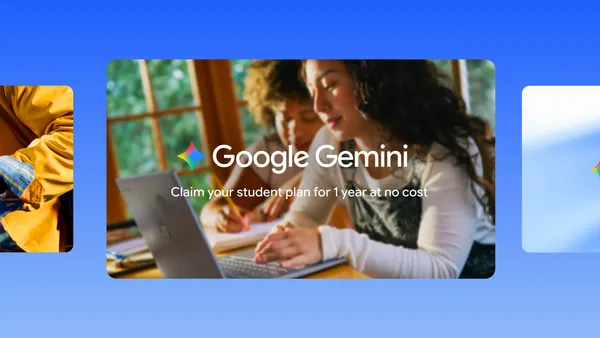
Eligible college students worldwide can receive one year of a Google AI plan at no cost, along with updated study features. Google also introduced a student hub, teacher-led tools, and SAT preparation in Gemini.
New AI learning features in Search provide interactive explanations, practice quizzes for the SAT, ACT, GRE, and LSAT, step-by-step learning with Lens, and organizational notebooks.
Gemini 3.5 Transcribe
Gemini 3.5 Transcribe is a real-time speech-to-text model for applications such as voice agents, live captions, and post-call analytics. Google said it is designed to handle noise and specialized terminology while producing accurate, context-aware transcripts.

Gemini Live productivity features
Gemini Live added Personal Intelligence, Daily Brief, Spark, and hands-free inbox management. These features are intended to help users discuss plans, manage tasks, and handle email through voice interactions.

Google reported that the Gemini app had more than 1 billion monthly users, describing it as the company’s fastest-growing product. It said 63% of users talk directly to Gemini, busy parents are 43% more likely to use it for everyday tasks, and Gemini generates more than 150 million images each day. Small businesses use its image, video, and audio tools to create marketing materials.
Video generation with Gemini Omni 1.1 Flash
Gemini Omni 1.1 Flash added video-generation controls including scene extension, first-and-last-frame interpolation, 4K upscaling, and faster prototyping. The model is available in Google Flow, Google AI Studio, the Gemini Enterprise Agent Platform, and the Gemini app.

Gemma and offline AI
Google said Gemma has passed 1 billion downloads and supports applications ranging from phones and edge infrastructure to space. Examples include research into interspecies communication and medical applications. Google also launched a community repository for sharing and collaboration.

AI for aviation and weather forecasting
Under Operation Blue Skies, Google’s forecasts help flight crews and air traffic controllers adjust routes to avoid forming contrails during normal operations. Google is working with the UK Government and aviation leaders to expand the technology across the North Atlantic.

Google researchers reported in a Nature paper that WeatherNext 2 predicts cyclone tracks, intensity, and wind structure with state-of-the-art accuracy. Google is open-sourcing WeatherNext 2 to support research and global climate resilience.