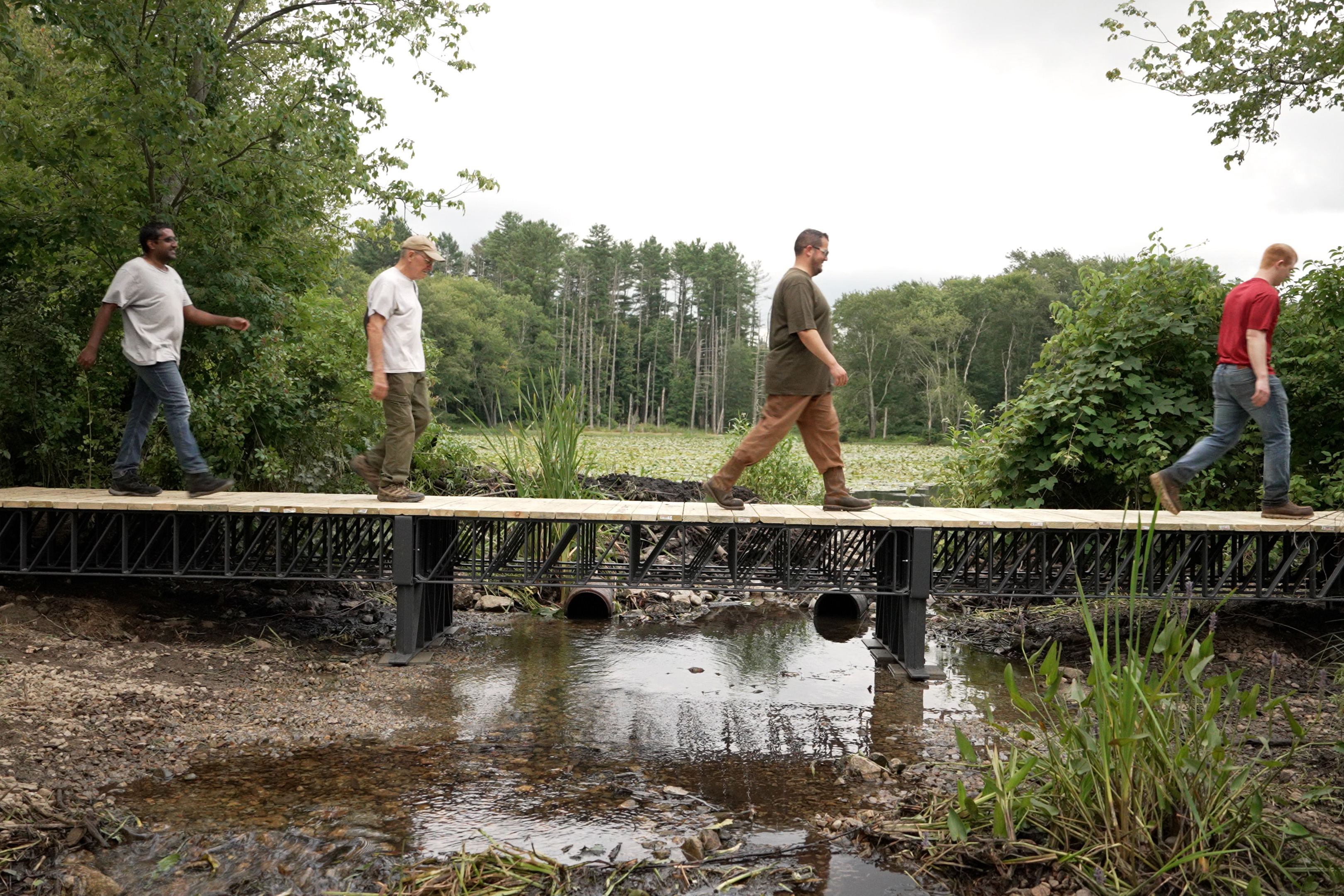
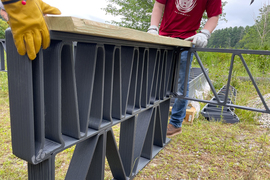
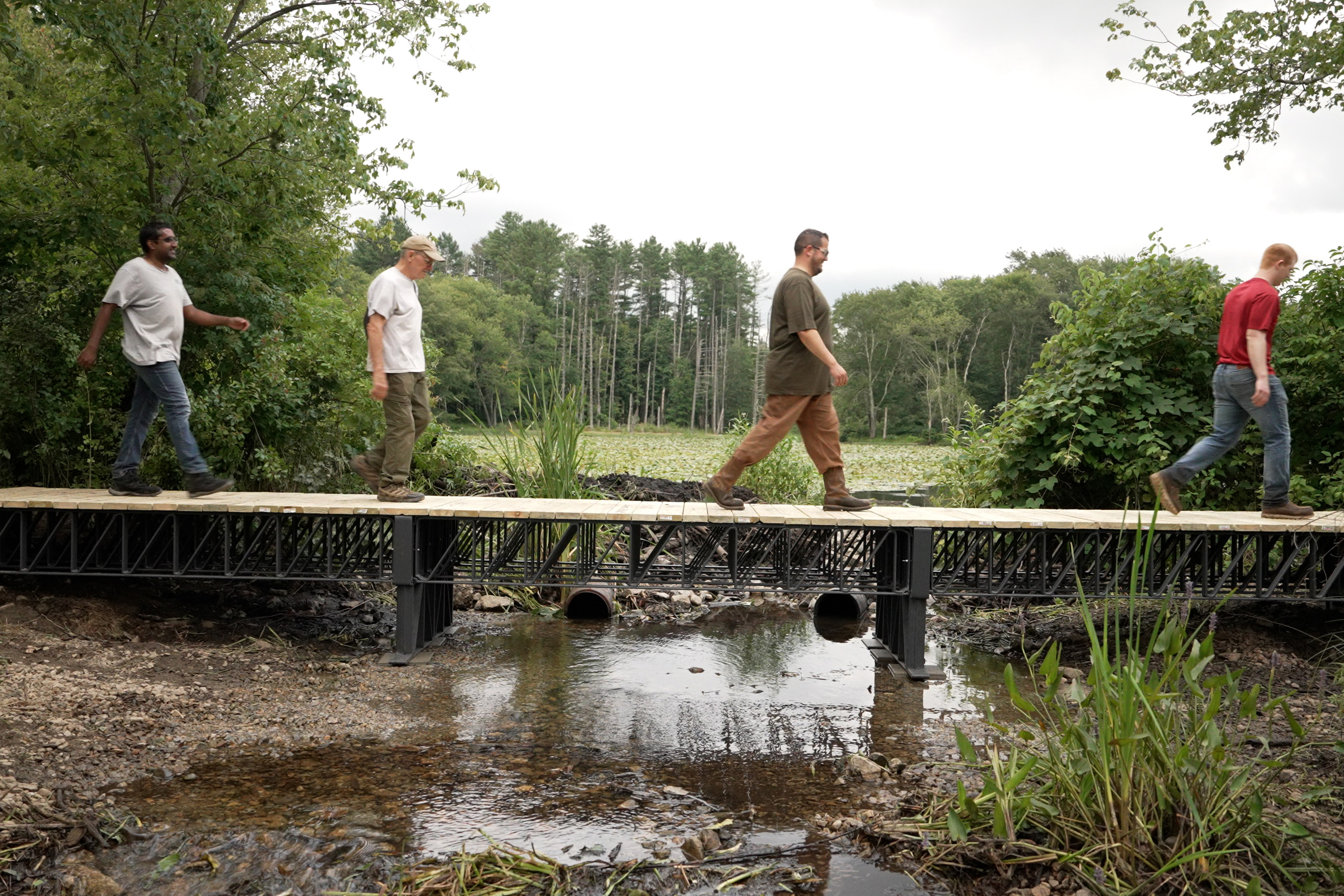
Atlas Building Composites supplied recycled composite trusses made in the United States for a 40-foot bridge built by the U.S. Army Corps of Engineers in a Massachusetts wetland.
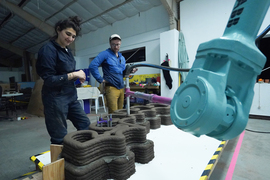
The company processes discarded single-use plastics with American-made fiberglass, then uses large-scale 3D printing to produce structural components.
Co-founder A.J. Perez sees local production as a way to reduce costs and environmental impact while creating jobs near the communities using the materials.
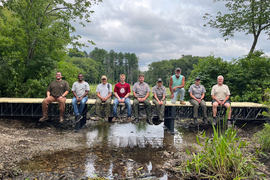
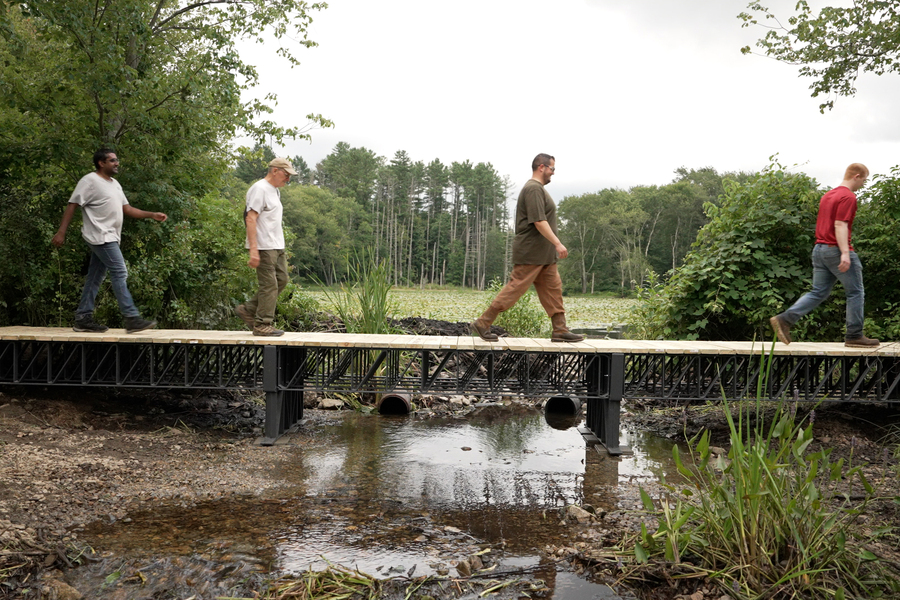
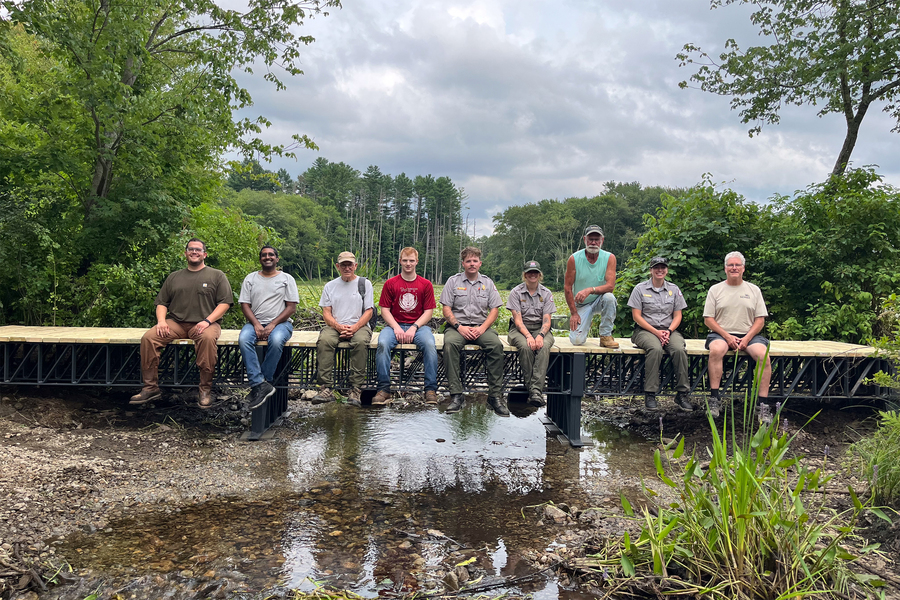
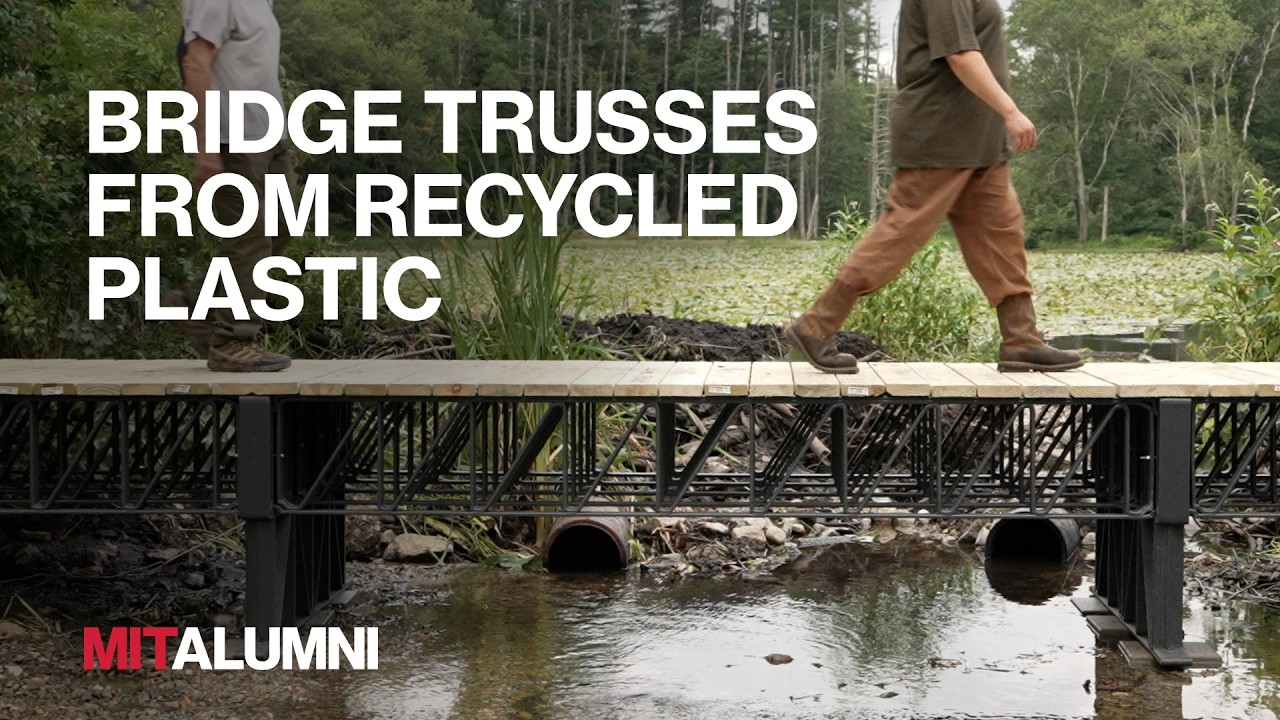
The Massachusetts bridge is an example of Atlas’ recycled composites being used in infrastructure.
Atlas aims to place its manufacturing systems close to both plastic waste supplies and construction demand.
Connecting housing demand with plastic recycling
Atlas Building Composites, an MIT spinout, is developing a single approach to two major challenges: housing shortages and plastic pollution. Its AI-powered robotic manufacturing platform transforms single-use plastics into durable construction materials.
The company grew out of MIT HAUS, short for Home Architecture for Universal Sustainability, in MIT’s Department of Mechanical Engineering. Its technology combines waterless plastic recycling with large-scale composite additive manufacturing to produce foundations, decks, and trusses for walls, floors, and roofs.
Perez, Atlas’ chair and co-founder and an MIT research scientist, earned MIT degrees in 2013, 2014, and 2023. His goal is to use waste-plastic composites to help build 1 billion homes while reducing reliance on tree harvesting, mining, and refining, and diverting plastics from oceans and landfills.
Atlas components already support barns, sheds, decks, and docks. Its recent Army Corps of Engineers project extended those applications to a 40-foot wetland bridge.
Perez and co-founder Matt Pouliot envision thousands of AI robotic production systems operating worldwide. Their waterless process can recycle low-grade plastics without depending on local water availability. Perez says this also removes some of the water-agency coordination and permitting work associated with establishing conventional recycling facilities.
From MIT research to the Atlas Factory Stack
Perez’s research has focused on advanced home fabrication and plastic recycling. In 2019, he established MIT HAUS with David Hardt, MIT’s Ralph E. and Eloise F. Cross Professor in Manufacturing.
The initiative initially targeted production of 1 billion homes over 30 years. Investigating the materials required revealed substantial supply-chain constraints. Perez estimates that conventional construction would require doubling global production capacity for materials such as concrete, alongside a sharp increase in deforestation.
He identified plastic waste as an alternative resource, pointing to 8 gigatons of plastic that had been produced and were polluting oceans, rivers, and cities.
Perez subsequently met Pouliot, a former Maine senator, and they founded Atlas to commercialize the MIT-developed technology. They worked with MIT’s Technology Licensing Office and later collaborated with researchers at other universities to independently develop technology for the robotic platform, which they named the Atlas Factory Stack.
The process starts by shredding single-use objects such as water bottles. The plastic enters the system, melts, and combines with American-made fiberglass to form a composite stronger than wood. A large-scale 3D printer then forms components, including trusses for floors, walls, roofs, and bridges.
MIT research by Perez demonstrated that large composite trusses could be printed in under 13 minutes and carry more than 4,000 pounds, exceeding key building standards.
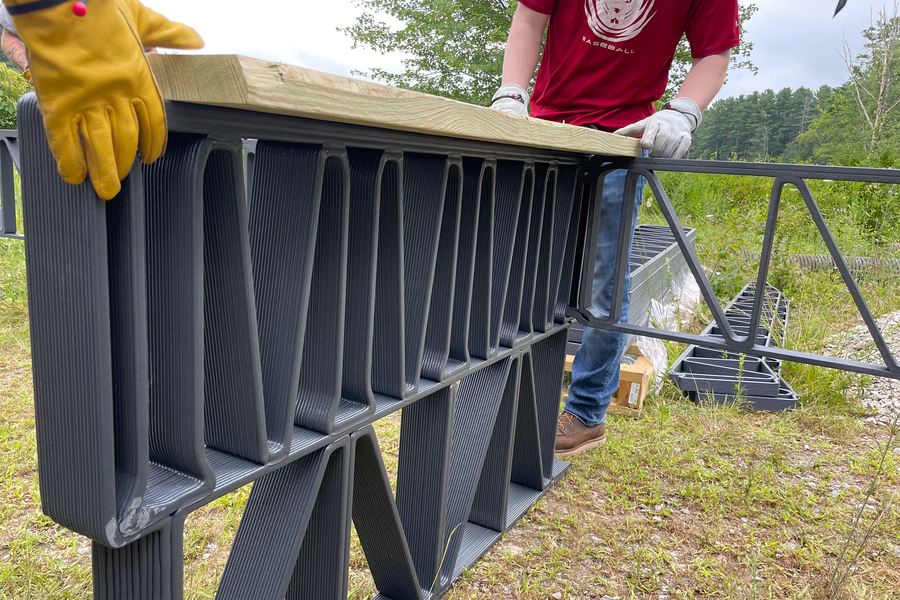
Perez reports demonstrated MIT production rates of 60 to 80 pounds of parts per hour. Systems being specified for Atlas factories are in the 150 to 200 pound-per-hour range. He sees potential for lower per-part costs than injection molding, with greater production flexibility. For example, parts can be manufactured in reverse order to arrange them appropriately on the finished-goods pallet beside the machine.
Atlas intends to provide technology for local home factories rather than rely on centralized manufacturing and long-distance shipping. Each factory cell can currently produce the structural framing components for approximately one small home per day.
Perez argues that localized production can create more community employment and reduce the costs and carbon footprint associated with large, distant factories. Widely available plastic waste provides a potential local feedstock.
Plans for international deployment
Plastics can outlast wood, particularly where materials touch soil or water. Pouliot sees long-lived construction products as a valuable destination for recycled petrochemicals because they can remain in service without repeated recycling, which degrades the material.
The Army Corps of Engineers bridge was installed in less than a day. Atlas is also discussing international deployment of the Atlas Factory Stack with prospective franchise partners.
The founders’ expansion model centers on countries using local waste and manufacturing capacity to create recycling, factory, and construction jobs, rather than depending on a single distant supplier.
Related research topics
Related coverage includes printed-plastic framing for future homes.
Another related topic is cold-spray 3D printing for on-site bridge repairs.
Additional coverage examines using mud to reduce building costs.